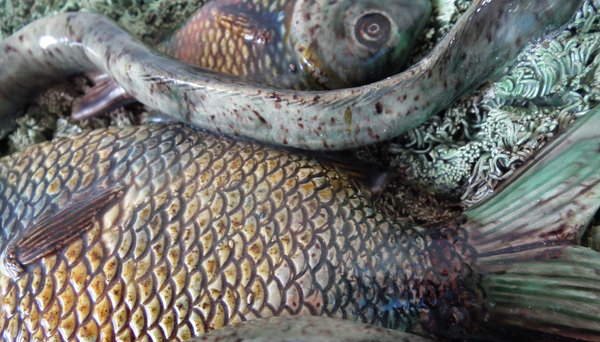
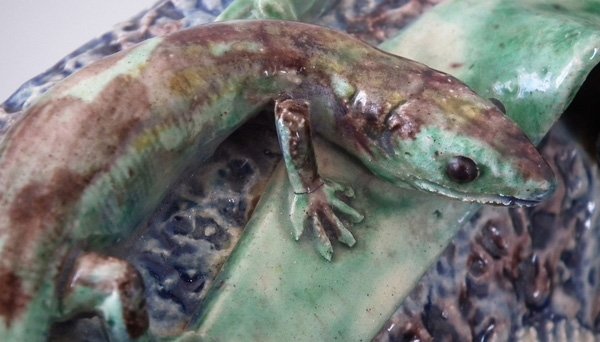
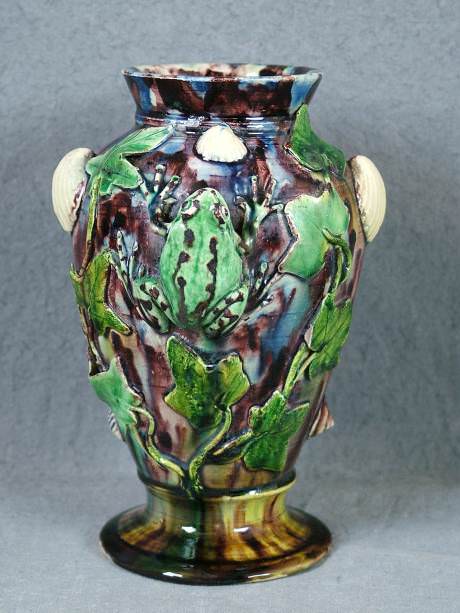
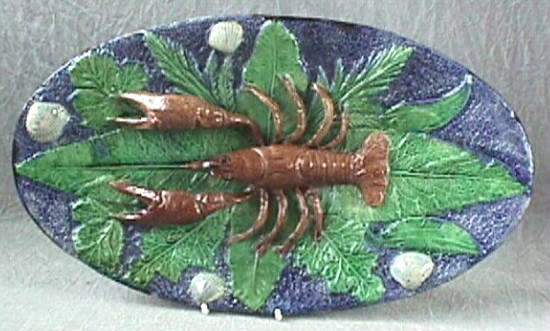
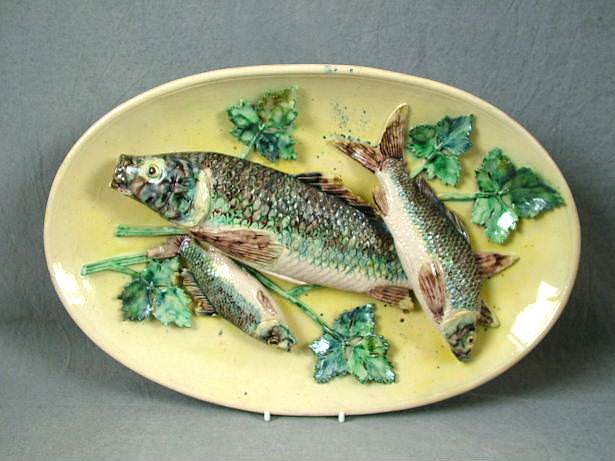
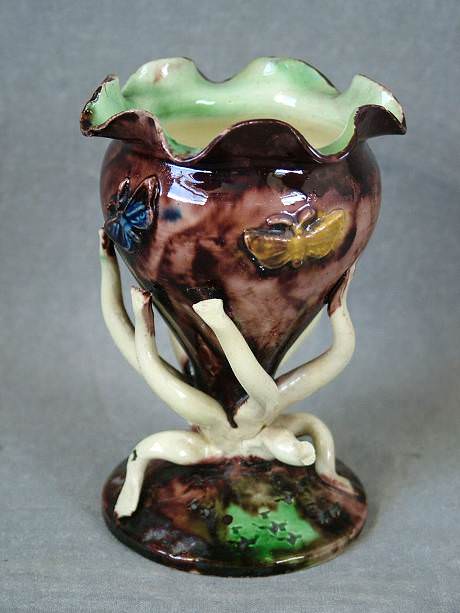
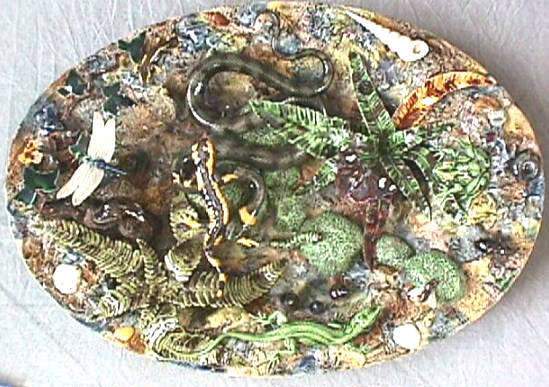
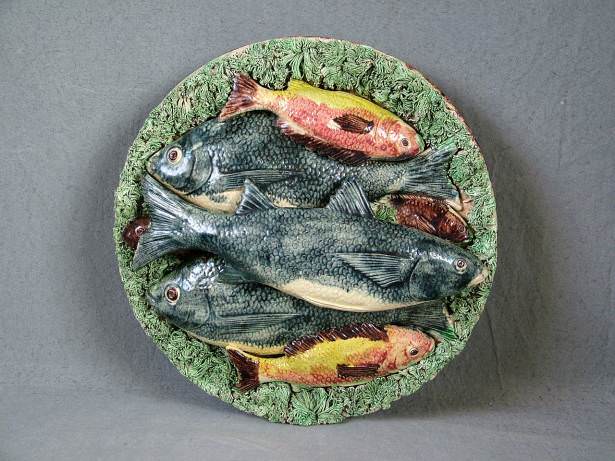
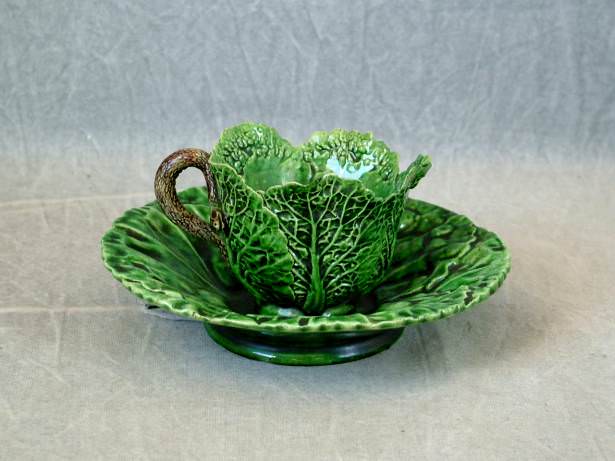
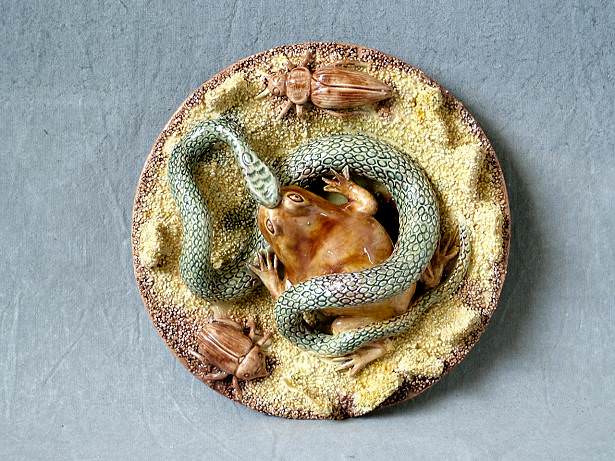
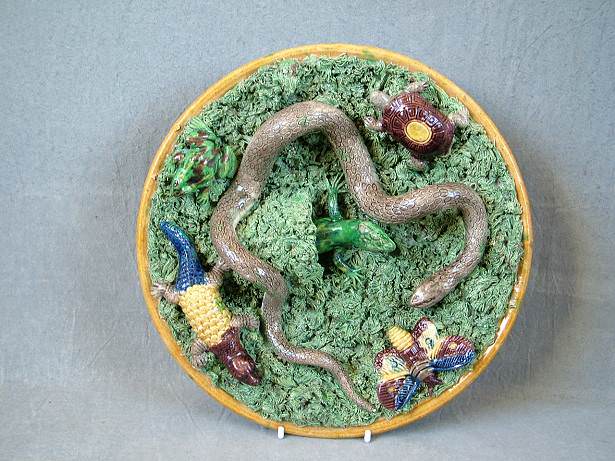
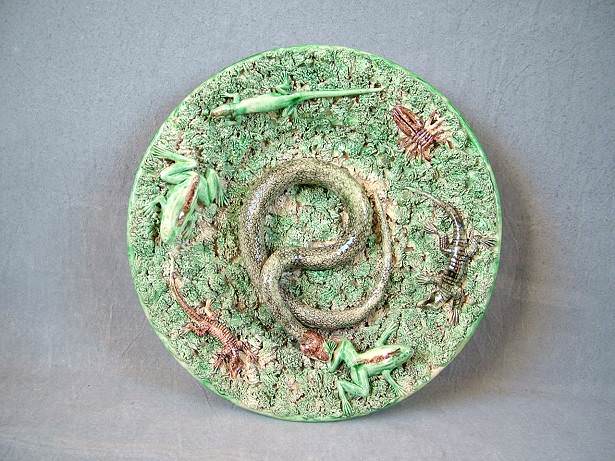
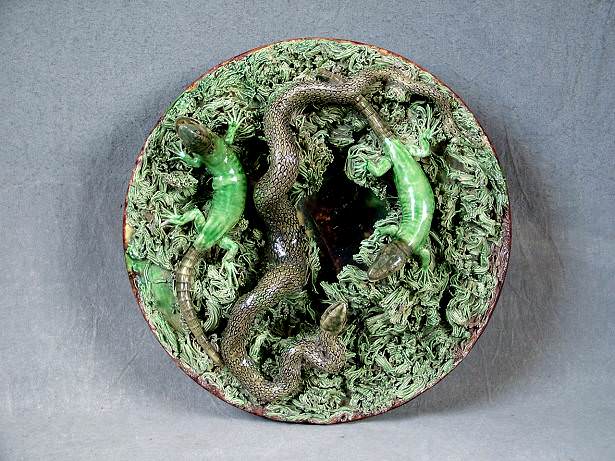
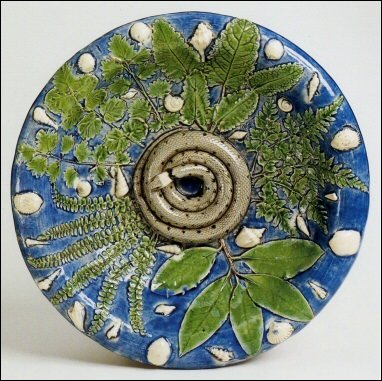
Palissy majolica was made mostly in France and Portugal, each in their own distinctive style.
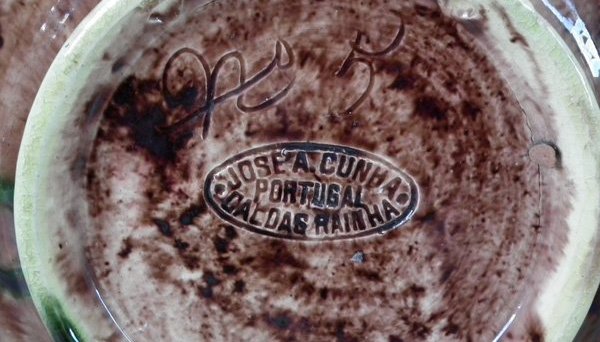
The wares of the Portuguese makers were usually marked.
French makers were less helpful, marking few pieces, and many makers producing pieces of similar style and glazes, making attributions difficult.
Top
Palissy Maker's Marks
Palissy Marks
Palissy majolica was made mostly in France and Portugal, each in their own distinctive style.
The wares of the Portuguese makers were usually marked.
French makers were less helpful, marking few pieces, and many makers producing pieces of similar style and glazes, making attributions difficult.
Top
Palissy
Palissy - Damage & Restoration
Pristine unrestored pieces are extremely rare. Some restoration is generally acceptable.
However, as restoration does affect value, when buying always ask. A seller who is not sure, either does not know or will not tell.
Many sellers do not draw attention to repairs and restoration in as much detail as we do so when buying don't forget to ask “Is there any damage or restoration?”
Depending on how well the work is done, and the rarity of the item, damage and restoration will affect value. For example, plainly visible badly matched color can impact the value. But an invisible repair with perfectly matched color will hardly affect value.
Spotting restoration
If your eyesight is not great, use a lens and bright light.
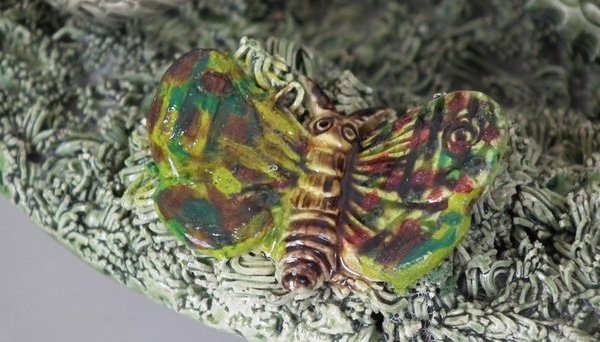
Check the most vulnerable areas carefully: antennae, legs of insects near the rim, the tips of the shredded clay nearest to the rim. Look for slight changes in color. Feel for a change in texture. Feel for a change in hardness - tapping lightly with a sharp steel implement works well - the softer acrylic of the repair can be distinguished by feel from unrestored glaze which is as hard as glass.
Top
Palissy - Real
Palissy - Real or Reproduction
Learn to distinguish between genuine 19th century Palissy ware at the good end of the scale...
and late 20th century reproductions from Portugal or the far East (which abound) at the bad end of the scale. Early 20th century Portuguese pieces can hold some value, but it is a very grey area. Some Portuguese factories continued production in the style of the early pieces well into the late 20th century.
Top
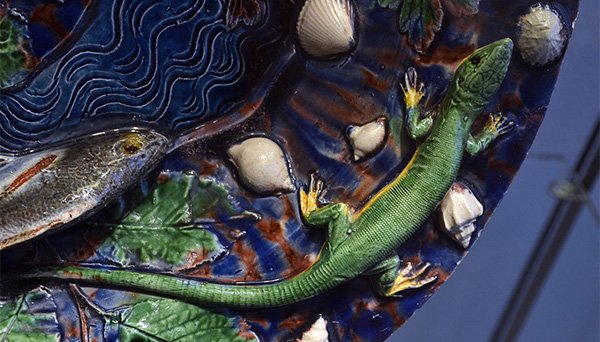
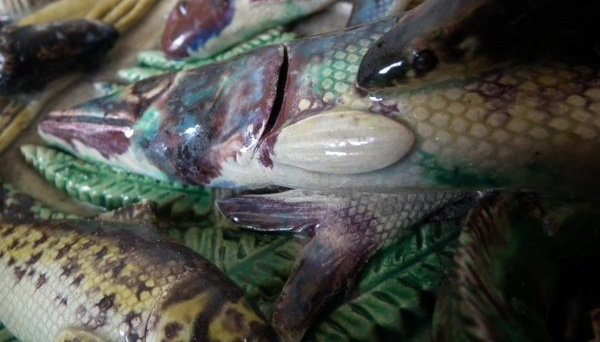
Bernard Palissy Platter Detail
Bernard Palissy - His Story
Bernard Palissy (1510-1590) was the gifted, obsessive naturalist, author, and potter, who first produced the Palissy style circa 1548.
For the first time in history molds were taken from actual specimens. Colored lead glazes were formulated to fuse onto an earthenware body
The story according to W.P.Jervis, a historian, penned a couple of centuries later, goes like this:
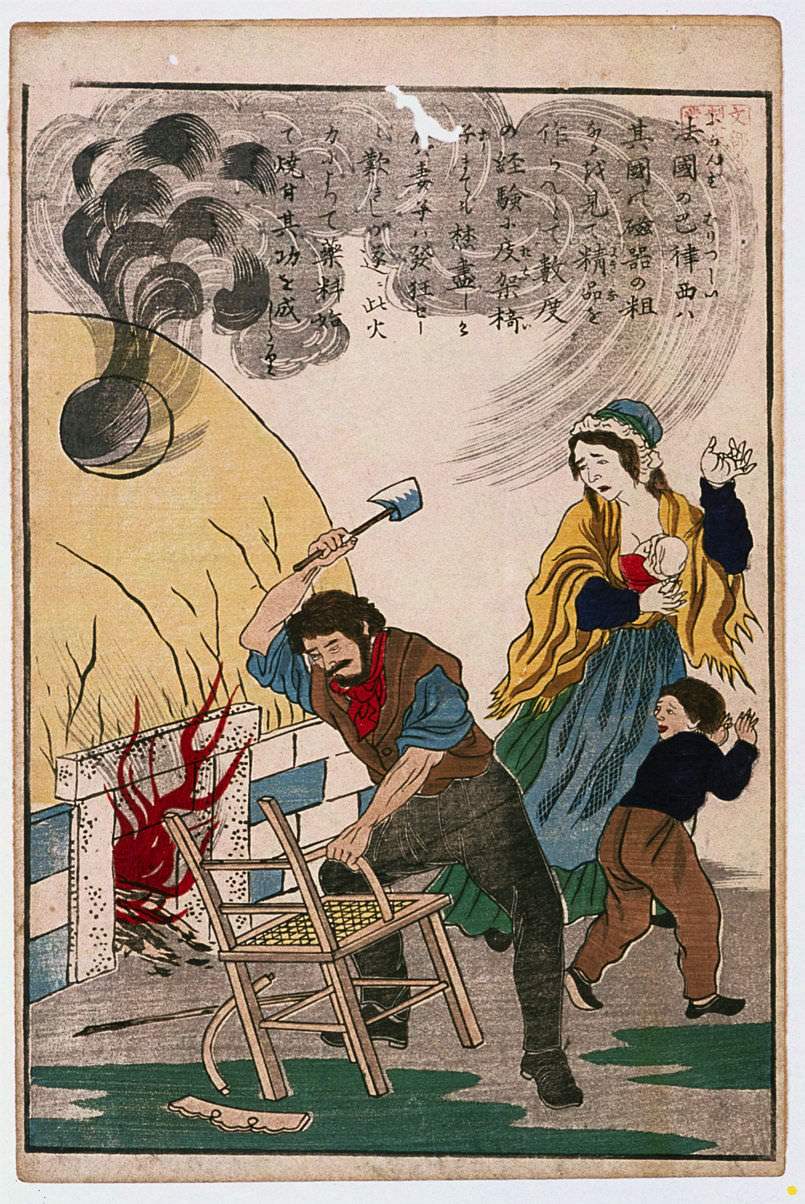
Bernard Palissy’s friends and neighbours looked upon him as a madman. In vain his wife pleaded. The kiln swallowed up everything and direst poverty stared them in the face. For sixteen years he struggled on, enduring the reproaches of his wife, the death of his children, the pathetic look of hunger in the faces of those spared to him, and the reviling of his neighbours. Undaunted by failure he sacrificed his furniture for fuel, his wife and remaining children, hungry and ragged, in vain imploring him to desist.
If this failed it was of necessity his last experiment. The very last stick of furniture had been thrust in the kiln, and the house stripped of every vestige of woodwork, and who shall attempt to portray with what emotions Palissy awaited the result... With trembling hands he drew the few pieces from the kiln - for a moment he dared not trust his senses - he looked again - THE GLAZE HAD FUSED. This changed everything and he lived happily ever after.